Healthcare today demands faster, smarter, more precise decisions. Yet clinicians make them under intense pressure, navigating layers of data and rising patient complexity. Nowhere is that tension sharper than in infectious disease, where small delays carry outsized consequences, and where every choice at the bedside feeds into one of the defining public health crises of our era: antimicrobial resistance.
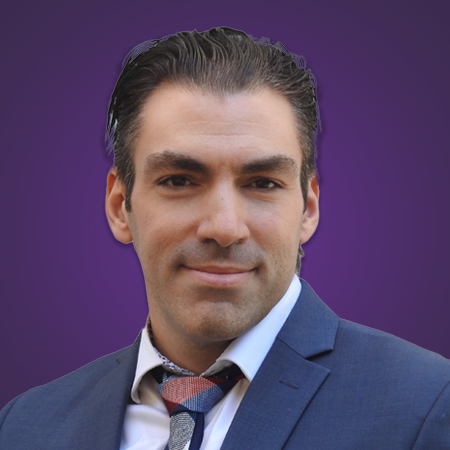
Dr. Ari Frenkel, MD, co-founder and Chief Science Officer of Arkstone Medical, has spent nearly two decades on both sides of this problem as a board-certified physician in internal medicine and infectious disease. His case comes down to one line: the future of medicine is not AI versus the physician. It is AI supporting the physician.
Prefer to hear it from Dr. Frenkel directly? The full Minutes Matter session is available to stream.
The infectious disease workforce shortage
Dr. Frenkel's perspective was forged in rural America, where he came to see antibiotic overuse as a systemic problem rather than an occasional lapse. At one point he was the only infectious disease physician for three hospitals and two counties, representing nearly 150,000 people.
That is the norm, not the exception. According to the IDSA, nearly 80% of U.S. counties have no infectious disease physician at all. Most hospital-based systems have no access to one, and outside the United States the figure can be worse.
The pipeline offers little relief. Infectious disease is a demanding specialty that is overworked and underpaid relative to its peers: more years of training, more board certification, more call, for less pay and harder cases. The result is predictable. Per the IDSA, more than 50% of infectious disease fellowship programs went unfilled in 2025.
The four-part stewardship gap
Antibiotic stewardship is an ecosystem, not a vacuum. Four gaps compound each other.
- The majority of counties have no access to infectious disease doctors.
- Even hospitals with ID physicians and stewardship programs cannot review every single antibiotic prescription.
- The majority of antibiotics are prescribed in the outpatient setting, where no formal stewardship programs function. The CDC reports 7 of 10 people receive an antibiotic, adding up to 256 million outpatient prescriptions a year.
- Newer infectious disease doctors are increasingly scarce as fellowships go unfilled.
The consequences are measurable. According to the WHO, between 2018 and 2023 antibiotic resistance rose in over 40% of pathogen-antibiotic combinations monitored, with an average annual increase of 5 to 15%. Unlike oncology, where innovation moves quickly, few new antibiotics are in the pipeline and older ones increasingly fail. The job does not get easier over time. It gets harder.
AI has already arrived
AI is being used for everything now, and it is already reaching patients. Dr. Frenkel recounts a patient who went to the ER because ChatGPT told her to. She would rather ask an AI than call her doctor, perhaps because she would be put on hold or never receive a callback. The relevant question is no longer whether AI belongs in care. It is how to harness it responsibly.
The critical case of sepsis
Sepsis is a uniquely powerful example. Unlike conditions tied to genetics or age, it can affect anyone, and small delays carry outsized consequences. In one study, failure to identify sepsis occurred in 81% of cases evaluated. The first 60 to 180 minutes are the most critical, and mortality rises with every hour of delay.
Yet the traditional workflow is built on guesswork. In one case, cultures returned 11 days after they were ordered, with sensitivity data arriving nearly two weeks later. The patient improved, but had they decompensated, the team would have been guessing the entire time.
Why more data is not the answer
Advanced diagnostics can cut pathogen identification from days to hours. But data without interpretation still leaves gaps. PCR results do not resemble the culture results clinicians know, and resistance gene information often leaves them guessing. One hospital system introduced molecular diagnostics only to abandon the project within months, because prescribing habits did not change. Worse, data overload, particularly within the EHR, can drive higher error rates and contribute to burnout.
Clinical decision support, defined
Clinical decision support is the answer to that gap. CDS tools help providers make better decisions by delivering relevant information at the right time. These systems analyze patient data such as history, lab results, medications and symptoms, and return recommendations, alerts or evidence-based guidance.
Every CDS system has three components:
The principle underneath all three is that CDS supports a clinician's judgment. It never replaces it.
The FDA's guidance is clear: software can avoid being classified as a regulated device when it does not interpret a signal, image or specimen directly, displays information to a clinician, rests on a peer-reviewed standard of care, supports rather than replaces decision-making, and provides full disclosure so the provider can verify each recommendation independently.
The AI nomenclature that matters
Not all AI is created equal, and in medicine the differences decide whether a tool can be trusted at the bedside. Four of them matter most.
- Device versus non-device. Whether the software meets the FDA criteria that require approval.
- Supervised versus unsupervised. Supervised models learn from labeled data where the answer is known. Unsupervised models hunt for patterns in unlabeled data. Arkstone prefers the term expert-in-the-loop, because the human validating the data is a trained specialist.
- Generative versus non-generative. Generative AI creates new content. Non-generative AI analyzes and classifies without inventing anything new.
- Predictive versus non-predictive. Predictive AI estimates what is likely to happen. Non-predictive AI presents established information without forecasting.
What can go wrong
A story recently went viral in which scientists created a fake disease, gave it a fake name, and published bogus papers about it. Large language models digested the fabrication as real and served it back to users as legitimate science.
At this point in time, large language models cannot reliably tell real data from fake. A system that can invent a plausible answer can also invent a dangerous one.
The safer architecture is the one Arkstone chose: supervised, non-predictive, non-generative, expert-in-the-loop. A system that can never make a recommendation an expert has not already validated.
How the OneChoice report works
OneChoice is built on exactly that architecture. It integrates directly with the laboratory information system, pulling patient demographics and lab data electronically, and requires no new personnel.
- No prompting. The input is predefined, removing the weakness where a changed prompt produces a changed output.
- The clinician always receives the report, even when they do not ask for it, because clinicians often do not know they are prescribing incorrectly.
- Expert-in-the-loop supervision. Every element of the report was verified by a human and trained over several rounds by different experts.
- Clinical nuance built in. The system accounts for inducible and presumed resistance such as AmpC and ESBL, the source of infection, age, pregnancy, allergies, oral bioavailability, and regional limitations.
- Data fusion. It reconciles PCR and culture data so rapid diagnosis and confirmatory accuracy work together.
The effect is to turn the static lab result, the one that looks like it was typed on a 1960s typewriter, into dynamic, actionable stewardship guidance with every result.
The evidence
The numbers reflect that scale. OneChoice has delivered more than 1.5 million stewardship recommendations and supported over 1.1 million patients, reaching more than 38,000 providers across 22,000 facilities in all 50 states, Peru and Ethiopia.
Peer-reviewed results
In one real-world lab partnership, nearly 18,000 results were delivered across roughly 1,000 clinicians in 28 states in a single year, with antibiotics not recommended in over 8% of specimens. That translated to more than 1,400 recommendations not to prescribe, each one a potential course of unnecessary antibiotics avoided.
The human element, preserved
Antimicrobial overuse remains a major unresolved challenge, and infectious disease physicians are in critically short supply. Even well-staffed systems cannot fully address stewardship needs, especially in the outpatient setting. But clinical decision support works, repeatedly and at scale.
A supervised, non-predictive, expert-in-the-loop, non-generative approach preserves the essential human element while strengthening decision-making. Because there is much that AI cannot do: compassion, empathy, intuition, ethical reasoning, the physical exam, and that unmistakable feeling when you know something is wrong before you have the proof.
The real future of medicine is not AI versus the physician. It is AI supporting physicians, returning time to clinicians so they can focus on what only humans can do. Because when it comes to infectious disease, minutes matter.